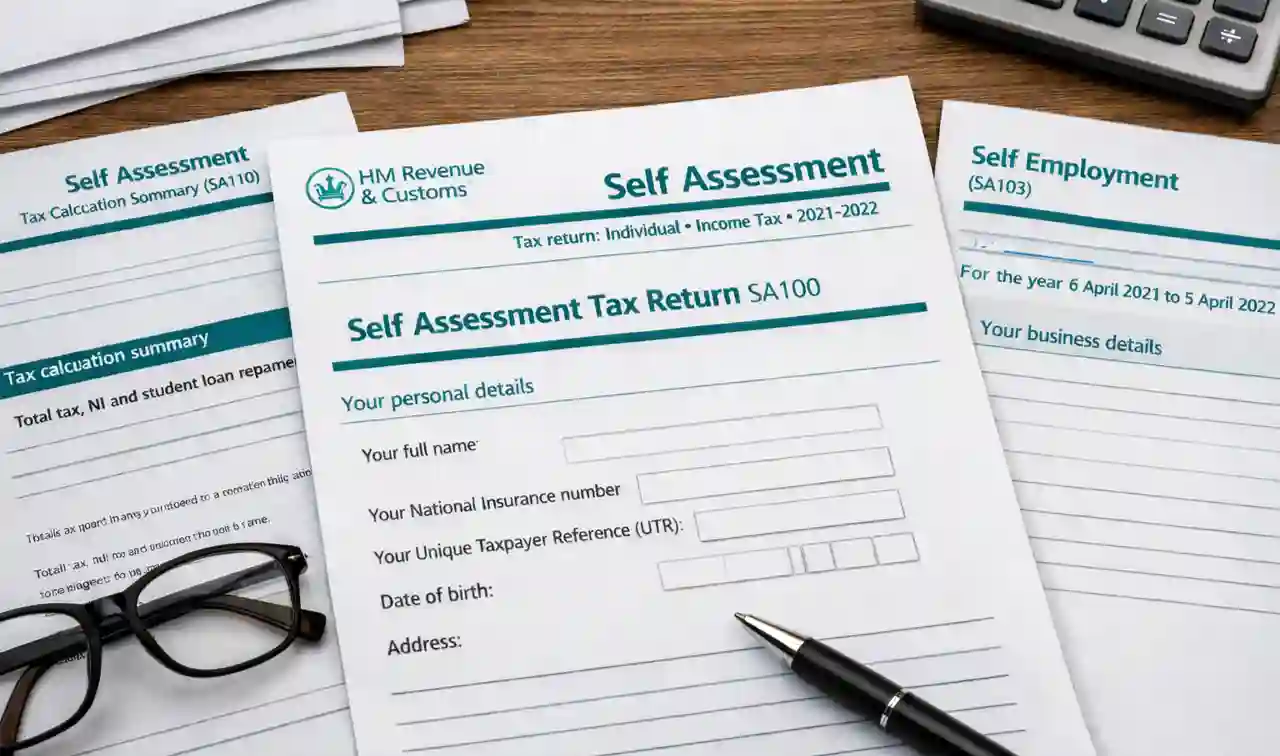
(SA100, SA101,SA102, SA103, SA104, SA105, SA106, SA107, SA108 & SA109)
If you are preparing your UK Self-Assessment tax return, it is essential to understand the various forms required by HMRC. Each form relates to a specific type of income or tax circumstance. Selecting the correct forms ensures your return is accurate and fully compliant with HMRC regulations.
This guide explains the most used UK tax return forms, what they are, who needs them, and the information required to include on these forms.
Whether you are employed, self-employed, receiving rental income, or earning from overseas, this guide will help you complete your tax return with confidence.
What are the main UK Self-Assessment Forms?
The most frequently used HMRC Self-Assessment forms include:
- SA100 – Main tax return
- SA101 – Additional Information
- SA102 – Employment income
- SA103 – Self-employment income
- SA104 – Partnership income
- SA105 – UK property and rental income
- SA106 – Foreign income
- SA107 – Trust income
- SA108 – Capital gains
- SA109 – Residence and remittance information
Each form is explained in detail below.
SA100 – Main Tax Return
The SA100 is the core Self-Assessment form for individual taxpayers. It covers all essential personal and financial details which each individual has to submit who is required to submit a tax return.
Following are the some of the details included on the form SA100 :
- Personal details of taxpayer (name, address, unique tax reference number (UTR), national insurance number (NINO) etc.
- Interest received from UK banks and building societies
- Dividends received from UK companies
- Pension income received (including state pension and private pension)
- Pension contributions
- Student loan and postgraduate loan repayments
- High income child benefit charge
- Marriage allowance
- Tax overpayments or underpayments
- Declaration and signature etc.
SA101 – Additional Information
If you need to report less common types of income, deductions, or tax reliefs that cannot be included on the main tax return, the SA101 must be completed. This form provides additional details to support your Self Assessment.
Information included on this form:
- Interest from UK securities (including gilts and deeply discounted securities)
- Disguised interest and accrued income profits
- Interest from peer-to-peer loans via UK platforms
- Stock dividends
- Gains from life insurance policies
- Business receipts taxed as income of an earlier year
- Share schemes and employment lump sums
- Married couple’s allowance
- Other tax reliefs and adjustments required by HMRC
SA102 – Employment Income
If you are employed (with one or multiple employers), the SA102 must be completed. This form summarises all income received through employment.
Information included on this form:
- Employer name
- Employer PAYE reference (from P45 or P60)
- Employment income
- Workplace benefits
- Employment-related expenses
SA103 – Self-Employment Income (Full Form)
Self-employed individuals or sole traders must complete the SA103. The full version is required if your turnover exceeds HMRC’s threshold for the short form.
Information included on this form::
- Business details and income
- Allowable business expenses
- Net profit or loss
- Capital allowances
- CIS deductions (if applicable)
- Class 2 and Class 4 National Insurance calculations
SA104 – Partnership Income
If you are a partner in a business partnership, you must complete SA104 to report your share of partnership income. Each partner submits their own SA104 alongside their Self Assessment tax return.
Information included on this form:
- Partnership details
- Your share of partnership income
- Your share of allowable partnership expenses
- Your share of profit or loss
- Capital allowances
- Partnership income from multiple partnerships (if applicable)
SA105 – UK Property Income
If you earn rental income from UK property,whether residential, commercial, furnished holiday lets, or shared ownership,you must submit the SA105.
Information included on this form:
- UK property details
- Furnished Holiday Lets (FHLs)
- Rental income
- Allowable property expenses
- Residential finance cost
- Taxable profit or loss
SA106 – Foreign Income
The SA106 is required if you receive income from overseas or have paid foreign tax.
Information included on this form:
- Overseas income and dividends
- Foreign tax credit relief
- Income from property abroad
- Overseas capital gains
- Foreign employment or self-employment income
SA107 – Trust Income
You must complete the SA107 if you have received:
- Income from a trust or settlement
- Income from the estate of a deceased person
The form covers various trust-related income types, including interest, dividends and rental income.
SA108 – Capital Gains
The SA108 must be completed if you have made capital gains that exceed HMRC thresholds.
You must file SA108 if:
- Your gains exceed the annual exemption (£3,000 for 2024/25)
- Your total disposal proceeds exceed £50,000
*According to current rules you must report and pay any Capital Gains Tax due on UK residential property within 60 days of selling the property.
SA109 – Residence and Remittance Basis
The SA109 is required for individuals with complex residence or domicile circumstances.
Information included on this form:
- UK residence status
- Personal allowances for non-residents
- Domicile information
- Claims for the remittance basis
Final Thoughts
Understanding which Self-Assessment forms, you need is crucial to submitting an accurate and complete tax return. Whether your income comes from employment, self-employment, UK property, overseas sources, capital gains or trusts, selecting the correct supplementary pages helps prevent errors and penalties.
Expert UK Tax Return Services – Stress-Free Filing
Struggling with your UK Self-Assessment tax return? Avoid costly mistakes and missed deadlines. At GM Accountants&Tax Consultants, we provide professional, reliable tax services tailored to your circumstances.
Our expert team offers:
- Support with all SA100–SA109 forms, including employment, self-employment, property, foreign income, trusts and capital gains
- Accurate reporting of UK property and rental income
- Guidance on foreign income and the remittance basis
- Capital gains and trust income calculations
- Maximisation of tax reliefs and allowances
We make the entire process simple, accurate and stress-free. Whether you are an individual, landlord or business owner, we ensure your Self-Assessment tax return is completed correctly and on time.
Contact us today at 02037734123 or email us at admin@gmtaxconsultants.co.uk to book your free consultation. We are here to help you stay compliant and make the process simple.
Disclaimer:
The information provided in this blog is for general informational purposes only and does not constitute professional accounting or tax advice. As individual circumstances may vary, readers are advised to contact us directly for advice tailored to their specific financial or tax situation.