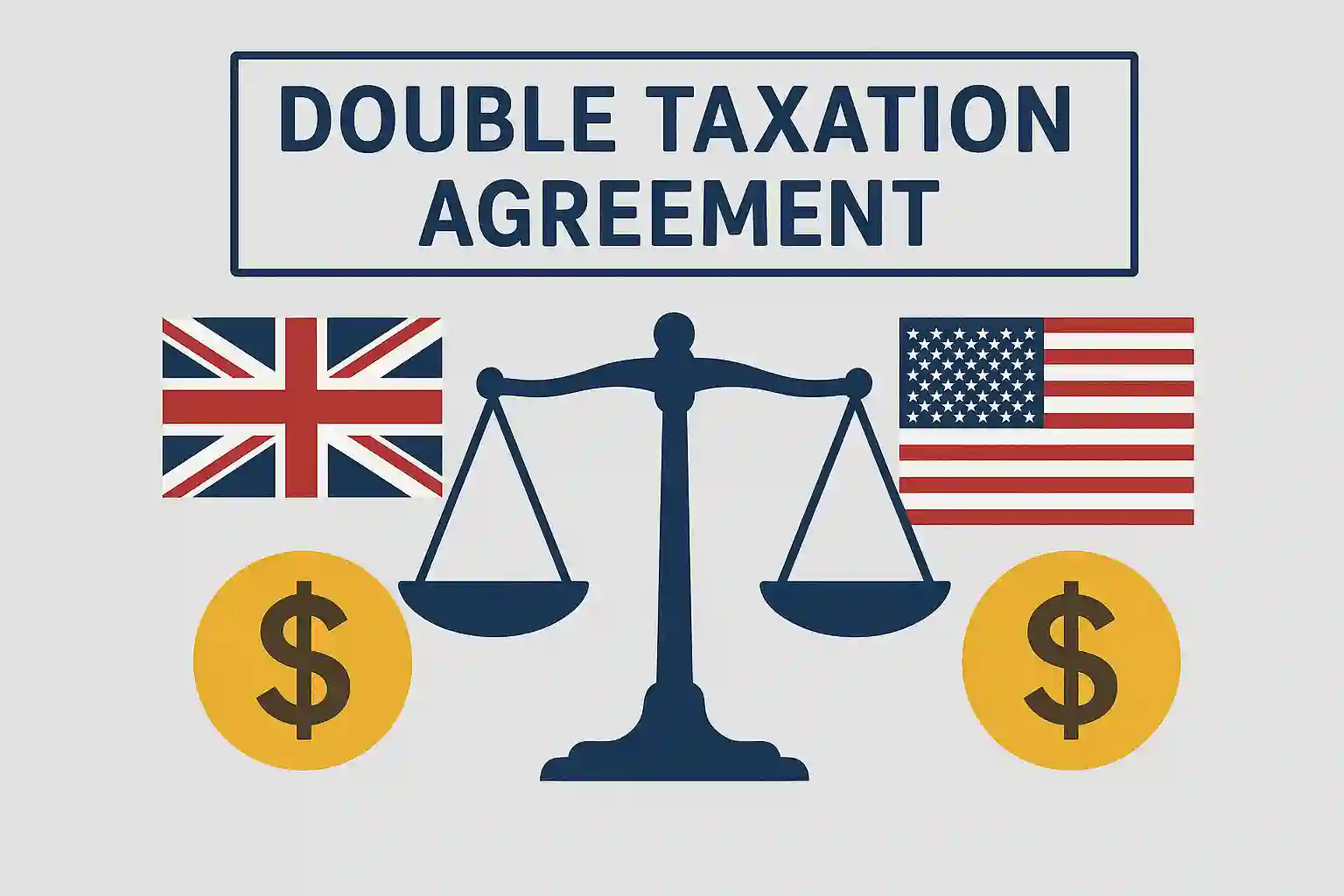
Double Taxation and UK Tax Rules
Sometimes, people or businesses have to pay tax in more than one country on the same income, for example, if they live in one country but earn money in another. The UK has Double Taxation Agreements (DTAs) with many countries to stop this from happening.
The basic idea is simple: the same income shouldn’t be taxed twice. DTAs decide which country gets to tax certain types of income and how you can claim relief, usually through a tax credit, exemption, or lower tax rate.
Double taxation can happen when:
- You are considered a resident in both countries for tax purposes.
- You live in the UK but earn income abroad, such as salary, dividends, or rent.
- A UK company has branches overseas, and both the UK and the other country want to tax the same profits.
What Is a Double Taxation Agreement (DTA)?
A DTA is an agreement between the UK and another country to make sure you don’t pay tax twice on the same income. It explains which country can tax things like your salary, pension, business profits, interest, or dividends, and how to claim relief.
You can usually get relief in one of three ways:
Tax credit – tax you paid abroad is deducted from your UK tax bill.
Exemption – some foreign income is not taxed in the UK.
Reduced tax rate – you pay a lower rate of foreign tax because of the agreement.
The main goals of these agreements are to:
Stop double taxation.
Make it easier for people and businesses to work and invest across borders.
Clarify which country gets to tax which income.
How DTAs Work for UK Expats
If you’re a UK expat earning income in more than one country, a DTA decides where you pay tax and how you can claim relief.
Depending on the agreement, you may be able to:
Claim relief before tax is taken, so you’re not taxed twice, or
Apply for a refund after paying tax abroad.
Usually, if one country’s tax rate is higher, you’ll end up paying that higher rate overall, but you’ll get credit for any tax already paid overseas.
Keep in mind that tax years and rules differ between countries, so always check the specific DTA and HMRC’s guidance for details.
Each DTA normally covers:
How your residence is decided.
Which country can tax each type of income.
The method of relief (exemption, credit, or reduced rate).
How tax authorities share information and resolve disputes.
What Types of Income Are Covered by a DTA?
You can usually claim double taxation relief on:
Employment income (salary or wages)
Pensions
Bank interest
Dividends (special rules may apply)
However, gains from selling UK property are normally taxable in the UK only and not covered by most DTAs.
At GM Accountants & Tax Consultants, our team of qualified accountants can assist and guide you on Double Taxation Agreements (DTA) and other tax matters. Do not hesitate to get in touch with us. If you are unable to visit our office, we can arrange a video call at your convenience. For more information, please email us at admin@gmtaxconsultants.co.uk or call us at 02037734123.
Disclaimer:
The information provided in this blog is for general informational purposes only and does not constitute professional accounting or tax advice. As individual circumstances may vary, readers are advised to contact us directly for advice tailored to their specific financial or tax situation.